
Peptide Reconstitution Calculator
Calculate approximate U-100 insulin syringe units based on peptide amount, water volume, and target dosage.
Calculator provided by Integrity Peptides as a free educational resource for peptide researchers.
How to Use the Peptide Reconstitution Calculator
This peptide reconstitution calculator helps estimate approximate U-100 insulin syringe measurements based on the amount of peptide in a vial, the volume of bacteriostatic water added, and the desired target dosage.
Step 1: Select the Peptide Amount
Choose the total amount of peptide contained in the vial. Common options are provided, including 5 mg, 10 mg, 20 mg, 50 mg, and larger quantities. If your vial contains a different amount, select “Other” and enter a custom value.
Step 2: Enter the Reconstitution Volume
Select the amount of bacteriostatic water added to the vial. This determines the final concentration of the solution and directly affects the syringe measurement required for a given dosage.
Step 3: Choose Your Target Dosage
Select the desired peptide amount you wish to measure. Common microgram values are available, and custom values may be entered when needed.
Step 4: Review the Result
The calculator will display the approximate U-100 insulin syringe measurement required based on the values entered. It will also display the resulting peptide concentration expressed in mg/mL.
Because the calculator performs the underlying concentration calculations automatically, it can help reduce manual math and provide a quick reference when working with different vial sizes and reconstitution volumes.
Understanding Peptide Reconstitution
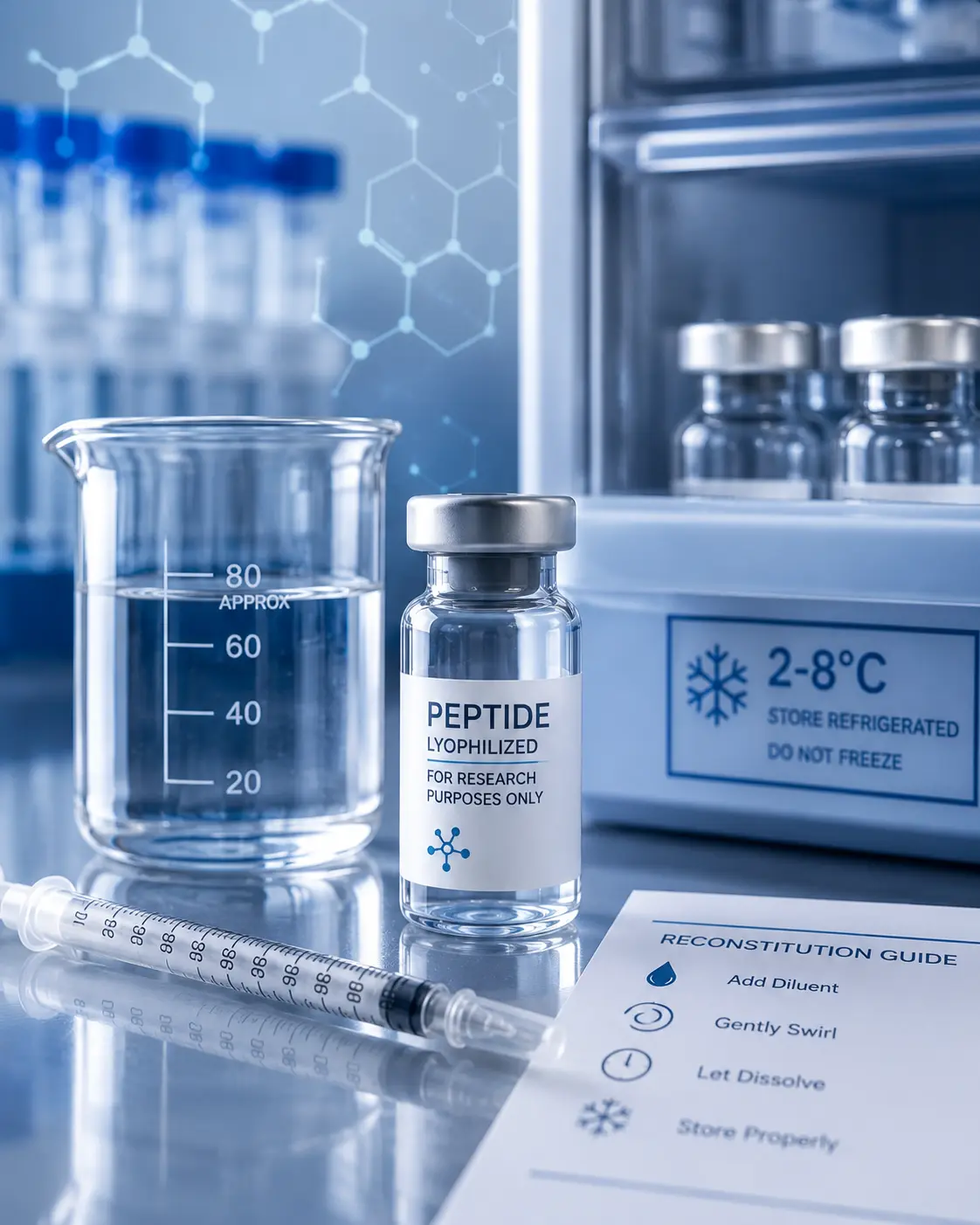
Peptide reconstitution is the process of adding a liquid, most commonly bacteriostatic water, to a lyophilized (freeze-dried) peptide powder. Once reconstituted, the peptide forms a solution with a specific concentration.
That concentration determines how much liquid contains a given amount of peptide. For example, the same target dosage will require a different syringe measurement depending on how much bacteriostatic water was added during reconstitution.
Accurate reconstitution helps maintain consistency and repeatability while reducing the likelihood of calculation errors.
Learn More About Peptide Reconstitution
If you’re new to peptide preparation, be sure to read our complete guide to peptide reconstitution, which covers:
- Choosing reconstitution volumes
- Bacteriostatic water basics
- Proper mixing techniques
- Storage considerations
- Common mistakes to avoid
View guide: Peptide Reconstitution Guide
Peptide Concentration Explained
Peptide concentration describes the amount of peptide present within a given volume of solution.
The basic formula is:
Peptide Amount (mg) ÷ Water Volume (mL) = Concentration (mg/mL)
For example:
- 10 mg peptide + 2 mL water = 5 mg/mL
- 20 mg peptide + 4 mL water = 5 mg/mL
- 5 mg peptide + 1 mL water = 5 mg/mL
Although the concentration remains the same in these examples, the total amount of peptide available differs.
The calculator automatically performs these conversions and estimates the corresponding U-100 syringe measurement based on your selected target dosage.
Understanding U-100 Insulin Syringe Units
Many peptide researchers use U-100 insulin syringes because they provide convenient volume measurements.
On a U-100 syringe:
- 100 units = 1.0 mL
- 50 units = 0.5 mL
- 10 units = 0.1 mL
- 5 units = 0.05 mL
The calculator converts concentration and dosage values into approximate syringe units to simplify measurement calculations.
Frequently Asked Questions
What is a peptide reconstitution calculator?
A peptide reconstitution calculator is a tool used to estimate peptide concentration and corresponding measurement volumes after a lyophilized peptide has been mixed with bacteriostatic water.
How do you calculate peptide concentration?
Peptide concentration is calculated by dividing the amount of peptide in the vial by the amount of liquid used for reconstitution.
How many micrograms are in a milligram?
One milligram (mg) equals 1,000 micrograms (mcg).
What are U-100 syringe units?
U-100 syringe units are volume markings commonly found on insulin syringes, where 100 units equals 1 mL of liquid.
Can I enter custom peptide amounts and reconstitution volumes?
Yes. The calculator allows custom peptide amounts, water volumes, and target dosage values for greater flexibility.
Does changing the amount of bacteriostatic water change the peptide itself?
No. Adding more or less bacteriostatic water changes the concentration of the solution, but it does not change the total amount of peptide contained in the vial.
Related Resources
To learn more about peptide preparation, storage, and quality considerations, explore these guides:
- Peptide Profiles & Protocols
- Peptide Stability, Storage, and Handling
- Understanding Peptide Testing and Quality Control
- Peptide Reconstitution Chart
- External Resources
Educational Disclaimer
This calculator is provided as an educational reference tool to assist with peptide concentration and reconstitution calculations. It is intended for informational and research purposes only and should not be interpreted as medical advice or guidance for human or animal use.